Ian Sollom calls for investment in education, transport and health services for existing communities within the Oxford Cambridge Growth Corridor
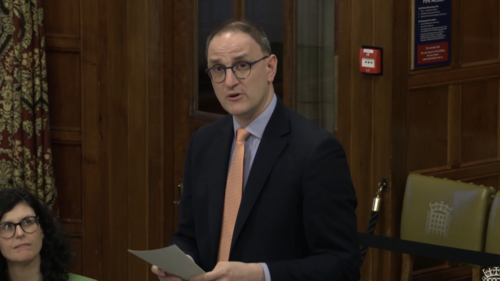
Liberal Democrat MP for St Neots and Mid Cambridgeshire, Ian Sollom, spoke today in a Westminster Hall Debate on the Oxford Cambridge Growth Corridor, urging the Government to commit to healthcare, transport and education infrastructure for the community in light of plans for large housing developments along the corridor.
The Oxford Cambridge Growth Corridor is the area between Oxford, Milton Keynes and Cambridge that, due to its high concentration of activity in the life sciences, AI and digital, advanced manufacturing and defence technology sectors, is a “key economic priority” for the Government. The Chancellor has pledged up to £400 million of initial funding to “kickstart development in Cambridge”, and the Government has named Tempsford - just 5 miles south of St Neots - as a key potential site for a new town of up to 40,000 new homes.
Ian Sollom’s full speech is below:
“The Oxford-Cambridge Growth Corridor has had something of a tortured history. For nearly two decades, various iterations of this vision have promised transformational change only to be shelved, rebranded, or, as was reported in 2022, mimed as being "flushed down the toilet" by a previous Secretary of State.
“The old OxCam Arc foundered not because the economic case wasn't there, but because it became a top-down exercise focused overwhelmingly on housing numbers rather than on building genuine opportunity for existing and new communities alike. So as we discuss the Growth Corridor today, I hope the knowledge and experience of constituencies like mine – already living with rapid growth – can inform a better approach this time.
“Unsurprisingly, this matters in St Neots and Mid Cambridgeshire,sitting as we do immediately to the west of Cambridge. St Neots itself sits at a genuinely strategic location – the intersection of the East Coast Main Line running north-south and the planned East West Rail connection, as well as the A1 running north south and the new A428 running East West. The Tempsford area just to the south, has been identified by the New Towns Taskforce, for a new settlement of potentially 40,000 homes, and sits at the confluence of multiple local authority boundaries - different authorities with overlapping responsibilities.
“This complexity makes integrated transport planning absolutely essential from the outset. Sustainable transport connections between existing towns and villages and new railway stations at Cambourne as well as Tempsford needs to be a key focus from the very beginning of planning – one that I hope the minister can commit to.
“There is some understandable uneasiness about the Tempsford proposal: worries about local schools and GP practices being stretched; concern about water scarcity and flooding issues. How healthcare infrastructure grows is a particular concern and one that my constituents are well familiar with.
“Northstowe in my constituency is set to be the UK's largest new town since Milton Keynes, with 10,000 homes by 2040. Its first residents moved in 8 years ago and yet there is still no permanent GP surgery, placing enormous strain on surrounding village practices. We see similar pressures on existing practices in and around Cambourne and St Neots itself, where the growing population is struggling to access GP services. The pattern is clear: houses get built, but the health infrastructure lags years behind.
“Can the Minister assure my constituents that he is actively working with colleagues in the Department of Health and Social Care to pump-prime healthcare services for new developments, ensuring these services are built to grow sustainably alongside the communities they serve?
“Then there's education and skills. St Neots is a further education cold spot.
“If we're serious about this corridor delivering good, high-skilled jobs in sectors like life sciences and advanced manufacturing, we need properly funded education infrastructure across the region - not just post-16, but excellent schools throughout. Scenario modelling suggests we'll need to attract and train hundreds of thousands of additional skilled workers.That requires investment in colleges, apprenticeships, and university expansion across the region, not just in Oxford and Cambridge.
“Environmental challenges cannot be an afterthought either. The Fens 2100+ programme is grappling with the reality that parts of Cambridgeshire are below sea level and face increasing flood risk.
“On a recent visit to the British Antarctic Survey, I heard directly about their concerns regarding sea level rise from climate change and the additional challenges this creates for flood management. The government's announcement of a new National Forest for the corridor is welcome – green infrastructure must be embedded from the start – but we also need commitments on water security and flood resilience.
“What my constituents need is not just transport infrastructure, but the full package of what makes communities work.Yes, we need East West Rail and improved road connections. But we also need the GP surgeries, the schools, the colleges, the flood defences, and the water infrastructure – and we need them in place as communities grow, not as afterthoughts decades later.
“The economic opportunity is real – it is why this vision keeps being revived – with the potential for the region to nearly triple its economic output by 2050 by some analysis.
“But that only happens if people can actually live here, access services, and build good lives. That means genuine cross-governmental working, because no single department can deliver what's needed here. It means ensuring existing communities like St Neots can actively participate in and benefit from growth, rather than simply absorbing its pressures.
“Crucially, it means this growth must deliver opportunity – the chance to access excellent education, to build careers in high-skilled industries, to afford to own a home and build a life here.
“The government has revived the ambition, but my constituents will judge it not by announcements or economic projections, but by delivery – by whether they can see a GP, whether their children can access excellent education, and whether we genuinely share in the prosperity promised.
“That's the test of whether this Growth Corridor works for everyone.”