Getting local government reform wrong will cost us all
When Ted Heath's Government embarked on the reorganisation of English local government in the early 1970s, it was hailed as the definitive solution to local government's problems. Graham Page, the minister who piloted the legislation through Parliament, confidently promised it would bring efficiency, yet by the time the changes came into force in April 1974, the Conservatives had been dumped out of office.
Far from solving problems, the 1974 reforms triggered endless rounds of further reorganisation. The metropolitan counties established in the 1970s were abolished in the 1980s. Unitary authorities were created in the 1990s, along with the abolition of a number of the new counties created in the Heath reorganisation. A rolling series of mergers have taken place ever since, with Whitehall consistently placing administrative convenience and speed over robust evidence and local consultation.
Cambridgeshire is the latest in line for this treatment.
In February, Jim McMahon, Minister for Local Government and English Devolution, wrote to the leaders of Cambridgeshire and Peterborough local authorities to invite them to present final proposals for reform into new unitary authorities by 28th November. That’s less than 10 months to develop final proposals. And to keep things extra convenient, the strong steer has been to use the existing districts as the building blocks.
Many have wished for local government reform in Cambridgeshire, and I am one of them. The current multi-body ecosystem has created coordination and governance challenges, democratic confusion and muddled lines of accountability.
But to be forced into shotgun marriages of convenience in our local government structures instead of taking a considered evidence-based approach will simply perpetuate those same problems with no benefit to anyone.
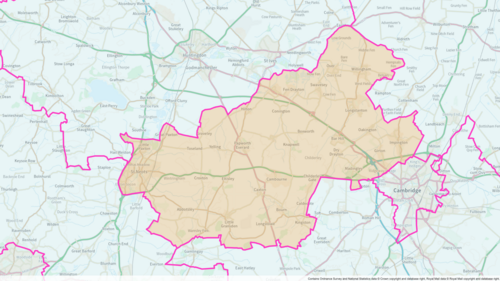
And the evidence for how Cambridgeshire actually works economically has been clear for some time. The Cambridgeshire and Peterborough Independent Economic Review (CPIER), commissioned by our own combined authority and published in 2018, identified three distinct economies in our region. Crucially, it found that much of southern Cambridgeshire—from Ely and the surrounding villages in the East to Huntingdon and St Neots in the west—is economically connected to Cambridge, not Peterborough. Since the CPIER, these economic patterns have only been further reinforced—wholly unsurprisingly, when the guided busway connects Huntingdon and St Ives to Cambridge, huge transport investment is going into the A428 corridor to St Neots, and improvements to the A10 to Ely are on the table.
But unfortunately, any reorganisation proposals that fit the Government's requirements will split this integrated economy across different new unitary authorities, simply creating a different version of the fragmentation that has frustrated residents and businesses alike.
Perhaps this fragmentation wouldn't matter if the changes delivered better value for money in local government services to Cambridgeshire residents, but academic research consistently shows that larger councils don't automatically deliver better services or cost savings. In fact, there's a striking lack of independent empirical research demonstrating that merging councils actually results in the promised economies of scale. What we do know from recent reorganisations is that rushed implementations create significant risks—failed financial systems, service disruption and coordination problems that can take years to resolve.
Getting reorganisation wrong will create problems that last for decades: fragmented authorities struggling to coordinate with each other, planning inconsistencies that delay investment and decisions made in isolation from the communities and businesses they affect most.
So is there a better way? The 2007 Local Government Act explicitly allows boundary changes where there is strong justification. Given the importance the Government places on our region in its growth plans you'd think they would be aware of the evidence that provides exactly that justification and the benefits of getting it right. But perhaps, as with the Cambridge Growth Company, they aren't really interested in empowering effective local government at all.
In October 1981, Graham Page died in office as MP for Crosby. The resulting by-election was won by Shirley Williams, who became the first SDP MP elected to Parliament. With both the SDP and later the Liberal Democrats, Williams championed decentralised governance and evidence-based policy—principles Liberal Democrats continue to advocate for. She most certainly would’ve understood that effective governance must follow economic geography, not administrative expediency.
Fifty years after Page's well-intentioned but flawed reforms, we have the chance to learn from history rather than repeat its mistakes. Cambridgeshire deserves reorganisation based on how our area actually functions, not what looks neat on a map on the wall of a Whitehall office.
This article was written for Ian’s monthly column in the Cambridge Independent.